Music therapy has become a promising complementary treatment in the health-care, especially at mental- and rehabilitation service. In venues such as the New Hope Women Rehab Centre Islamabad, music therapy is fast gaining popularity due to its potential to help people cope emotionally with mental illness, decrease stress and enhance overall mental health. Attention to detail, experience and an individualized approach are needed in order to set up a formal program within hospital or rehabilitation based music therapy.
Understanding Music Therapy in Healthcare
Music therapy is a time-limited, goal-directed, and context-structured clinical treatment in which trained therapists use music therapeutically to address physical, psychological, cognitive, and/or social needs of individuals or groups. Unlike passive music listening, a therapy can be active which means hands-on techniques such as singing and instrument playing, songwriting, or guided listening are adapted to each patients’ therapeutic goals. At a mental rehab clinic in Islamabad Pakistan, such services are especially beneficial to recovering addicts, anxiety patients, depressive and trauma cases.
The Place of Music-Therapy in Psychological Treatment
Music therapy is also focused on by hospitals and rehabilitation facilities, where it may be offered along with standard treatments. Its benefits include:
- Emotional expression: It is easier for patients to express their feelings and experiences with music than it is through words.
- Reduced stress and anxiety: The rhythm and harmony might be calming and alter mood.
- Cognitive rooster: Music has been shown to improve memory, attention and executive function.
- Socializing: Group music making encourages a sense of community and decreases isolation.
- Motivation and engagement: Music therapy experiences contribute to increased participation in therapy sessions and overall treatment compliance.
Critical Components of Establishing Music Therapy Services in the Hospital
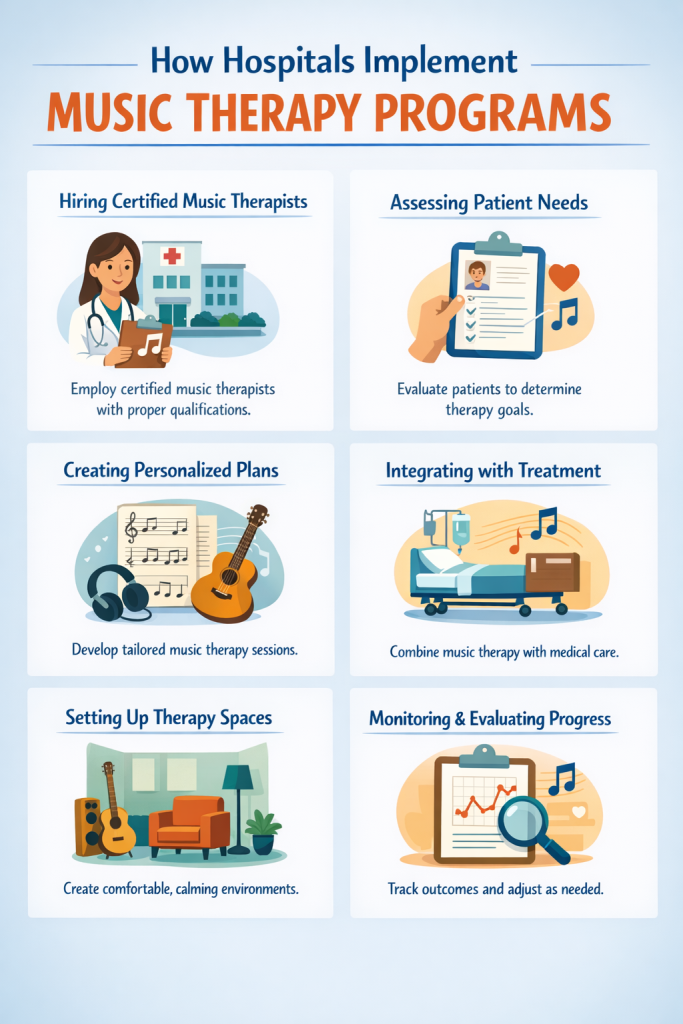
A successful music therapy program is one that promotes a balance between the structure of protocols and flexibility to adapt treatment to individual patient needs within hospitals. Here is how a number of institutions do it:
1. Assessment and Goal Setting
A thorough evaluation of the physical, cognitive and emotional status of each patient by two licensed music therapists precedes treatment. These assessments assist in determining the best music interventions, be it active participation, listening drills or songwriting workshops. Customized #assessments for patients’ at a #MentalRehabilitation Center in Islamabad Pakistan, so that their treatment corresponds to the needs of their recovery.
2. Designing the Therapy Plan
A well-designed therapy plan includes:
- Frequency and duration of sessions
- Type of musical activities(instrumental, vocal, guided listening, improvising)
- Stress reduction, emotional regulation and social skill development as therapeutic targets
- Combined with other psychosocial interventions (counseling, occupational therapy etc)
This type of careful planning helps to ensure that the music therapy program does not interfere with established clinical programs so as to over-burden patients.
3. Professional Training and Staff Involvement
Trained music therapists are essential for program efficacy. Hospitals offer continued staff development to incorporate principles into patient care. Teamwork between psychologists, psychiatrists and rehab clinicians improves outcomes in therapy—especially in the women’s mental health center.
4. Safe and Supportive Environment
It is very important that your treatment room stimulates a relaxed and welcoming ambience. Hospitals will provide patients and families with a calm environment or therapy rooms designed for relaxation and human interaction, complete with instruments, audio visual equipment and seating to suit. Establishing a safe and culturally appropriate environment for participation in music sessions of patients at a mental rehabilitation centre, Islamabad Pakistan.
5. Monitoring and Evaluation
Critically, through ongoing assessment and monitoring therapists can adapt interventions to reflect the patients development. Tools such as mood monitoring, behavioral observation and patient feedback are used to determine effectiveness. This iterative process provides the opportunity for therapy to be patient-focused and adaptable to changing circumstances.
Music Therapy as a Part of Wider Mental Health Programs
Music therapy is often part of larger rehabilitation programs at hospitals and complements holistic patient care. In women-centered mental health programs, music therapy may enhance cognitive-behavioral therapy (CBT), art therapy, and mindfulness as part of the healing process. Such integrative approaches help to develop resilience, enhance coping skills and support sustainability of mental well-being.
Secondary Benefits and Considerations
There are many direct benefits to music therapy, and hospitals see a variety of ripple effects as well:
- Improved patient-staff relationships
- Increased patient satisfaction and engagement
- Encouragement of self-expression and creativity
- Advocacy of family in therapy
Yet, to prevent overstimulation or physical discomfort, individual patient sensitivity, cultural preference and medical state should be well taken into account.
Top-Trending Hospital Music Therapy Techniques
Obviously, you haven’t been to a music therapy session lately Music therapy programs today will frequently include hot techniques that match up with current thinking about [menta: …
- Music with guided relaxation: Relaxation exercises using music to relieve anxiety
- The use of live music: performances by therapists commensurate with the intensity that enables an emotional connection
- Music Therapy: Digital Music Therapy using apps and virtual instruments for remote or blended sessions
- Group Improvizational sessions: Promotion collaboration, cooperations and socialization between patients
These approaches illustrate that the field of music therapy is flexible and evidence-based, accommodating a wide variety of patient issues.
Your music therapy in hospitals questions, answered
1. What is the typical duration of a music therapy session?
The length of sessions is 30-60 minutes, also depending on the individual patient and therapy goals.
2. Is music therapy complementary with a medication?
Yes, music therapy is another treatment modality and is frequently part of larger rehabilitations programmes.
3. Do people have to be able to play instruments in order for them to benefit from music therapy with you?
A. Music therapy is for all patients and does not require any musical experience.
4. Do the effects of music therapy last?
Results may vary, but regular participation will lead to continued emotional and cognitive health.
5. What Can Families Do to Support Music Therapy at Home?
Families can also help promote active listening, participate in home music activities or attend group sessions when possible.
Conclusion
It is important to have a ‘patient centred’ approach when introducing music therapy services into a hospital setting. Through expertise, personal planning and a caring environment, places such as the New Hope Women Rehab Centre in Islamabad prove how music therapy has become an integral component of mental health treatment. For a drug addiction treatment hospital islamabad, visiting the Mental rehabilitation center of hospitals with a well-planned music therapy session can lead to an entire journey for emotional, cognitive and social health.