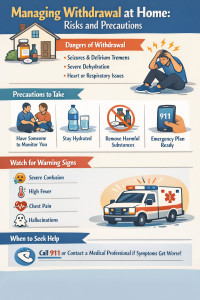
Managing withdrawal symptoms at home is both difficult and delicate and requires cautious planning, insight and assistance. This may involve Make sure the home environment is clean and supportive. Substance withdrawal can be both physically and emotionally exhausting; trying it without professional guidance is slow process. However, though fighting addiction is difficult it is utterly necessary to have acces to safe ssppotest While dealing with istars, the Islamabad Mental Rehabilitation Center emphasizes the importance of understanding all the risks and necessary precautions for managing withdrawal at home.
Understanding Withdrawal
Withdrawal is a distressing state of mind and body that a person experiences when he or she stops taking an addictive substance. The dependence the body and brain have developed on this substance means that if abruptly discontinuing use can lead to any number of different types of physical and/or psychological symptoms. How they manifest will depend on the nature, duration of use and general state of health of the individual. The most common substances associated with withdrawal are alcohol, prescription mediciness, and opiates.
Symptoms of withdrawal can range from mild to severe. Physical symptoms may include nausea, vomiting, sweating, shaking and rapid heartbeat. P sychological symptoms on the other hand often involve anxiety, depression, irritability and difficulty sleeping. It is essential to recognize these early warning signs as withdrawal takes place at home.
Risks of Home Withdrawing
1. Medical Complications
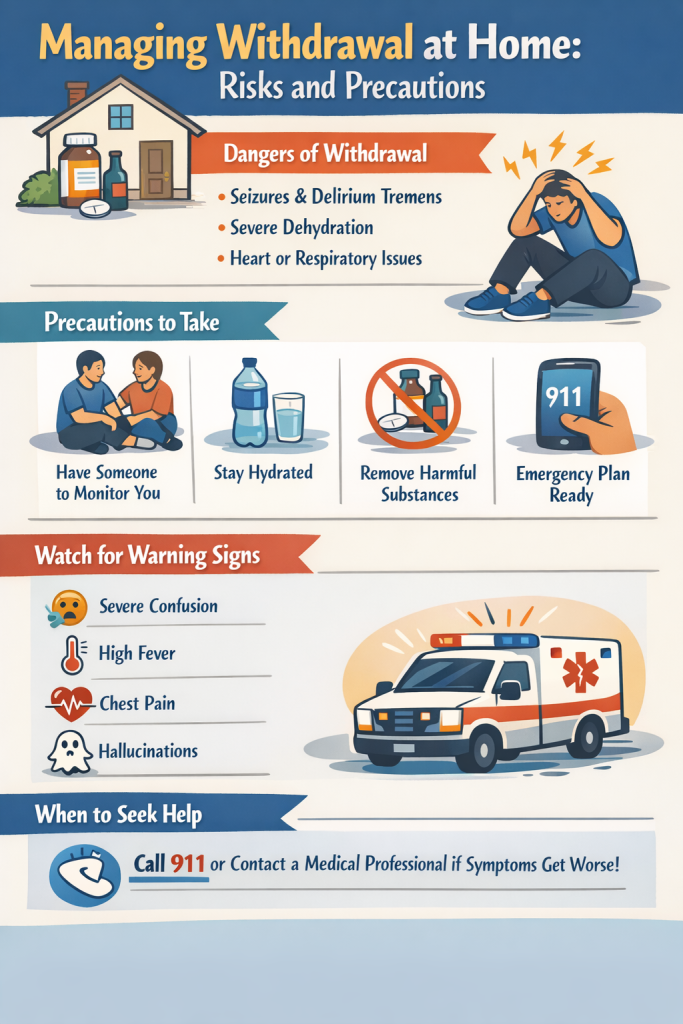
Some withdrawal symptoms can escalate quickly into medical emergencies. For example, alcohol withdrawal can lead to seizures, delirium tremens, and severe dehydration. Similarly, opioid withdrawal, though rarely fatal, can cause extreme discomfort, dehydration, and electrolyte imbalances. Without medical oversight, these complications may go unnoticed or untreated.
2. Emotional and Mental Health Challenges
Withdrawal can exacerbate pre-existing mental health conditions. Anxiety, depression, or mood swings are common during the detox process. Women managing withdrawal alone may experience isolation and emotional distress, which can increase the risk of relapse or self-harm.
3. Risk of Relapse
Home-based withdrawal often lacks structured support systems. Without proper supervision, individuals may relapse to alleviate severe withdrawal symptoms. The absence of counseling, behavioral therapies, and peer support reduces the likelihood of successful long-term recovery.
4. Lack of Immediate Support
During withdrawal, medical and emotional crises can happen without warning. Lack of trained health professionals on the scene leads to delayed treatment and potentially poorer health outcomes.
Precautions for Home Withdrawal
If home-based detox is still the only option, then it is vital to take steps to protect yourself. New Hope Women Rehab Centre Islamabad Pakistan: A recommended Mental Rehabilitation Center in Islamabad recommends the following measures for doing so:
1. Prior Medical Consultation
Before beginning withdrawal, consult with a qualified health care professional. A physician can evaluate your physical condition, suggest safe discontinuation schedules and direct treatment of symptoms. For certain drugs, medical detoxification may be necessary to avoid serious complications.
2. Build a Secure Environment
Prepare yourself for withdrawal by creating a good living environment. Remove triggers such as alcohol, drugs, or paraphernalia. Make sure you have access to nutritious food, clean water and a comfortable place to sleep. An organized, calm environment will help reduce anxiety and encourage adherence to the detox plan.
3. The Support Group
Having a support group is essential. Especially family members, friends and trained caregivers should monitor your condition regularly. They should also help you stick to medical advice and provide emotional support etc. Sharing your experience with others cleanses away the feeling of isolation and raises the rate at which you will be able to undergo withdrawal.
4. Hydration and Nutrition
When you’re in withdrawal everything gets drained out of you, including the essential nutrients and fluids your body needs to function.You can stay hydrated while maintaining a balanced diet for physical recovery and mood elevation.Drink fluids high in electrolytes; take small, more numerous meals-these are small tactics we’ve found can help reduce the withdrawal symptoms in general.
5. Gradual Reduction If Possible
Sometimes it is safer to gradually taper off the substance under the surveillance of professionals than stop suddenly. Medical recommendations that lead to step-by-step reductions can reduce pain, lower risk and minimize withdrawal effects.Left to our own devices and without someone looking over our shoulder, the gradual tapering we might have the strength now could be dangerous-even for high-risk substances.
6. Monitor Symptoms Closely
This requires close attention. Watch for changes in heart rate, mood, sleep patterns–physical and emotional symptoms as well. If rare or severe symptoms present themselves, get the patient to a doctor at once.
7. Emotional Coping Methods
Intergrate practices like yoga and deep breathing, or writing down fears on paper. When you are in withdrawal, stress management is the key to emotional stability, lower craving levels and even chance.Ordinary regimentation can also provide both a sense of control and an assignment.
The Preference for Professional Care
Though it may seem most convenient at home-based withdrawal, professional rehabilitation facilities offer comprehensive support and this significantly enhances the safety and success of any program. New Hope Women Rehab Centre Islamabad, for example, provides such things as: detox under medical monitoring that is treatment oriented; psychological counseling; therapy based on behavioral principles; long-term mental health care like after-care access. The presence of trained personnel who can intervene immediately if complications set in lowers the chances for relapse back into addiction while promoting a more all-round recovery.
Extra Considerations For Women
Women may face different challenges during withdrawal due to menstruation, hormone fluctuations and social roles. Some points for reference:
- Fluctuations in Hormones: Hormonal cycles tend to cause changes in mood as well as withdrawal’s subjective severity. Solving distress by tracking symptoms in relation to periods might give relief.
- Dual Diagnosis: The occurrence of anxiety, depression, or trauma may mean these co-occurring mental health conditions are more prevalent and require integrated care.
- Social Support: Women who live with addiction face not only chemical dependencies but also society’s disapproval. Both emotional support and an unthreatened environment become indispensable for them to feel at home.
New Hope Women’s Rehabilitation Centre: Located in Islamabad, Pakistan and with an international staff, is the first of its kind in the Asian continent to focus exclusively on treating women addicts. We know that women with addiction have different needs from men in terms of both treatment and support.
FAQs: Managing Withdrawal at Home
1. Is it safe for me to manage withdrawal at home without professional help?
A: With mild withdrawal, support from friends or loved ones and professional supervision are strongly recommended. Medical oversight lessens the risks of complications and relapse.
2. How long does withdrawal typically last?
A: The duration of withdrawal ranges depending on substance type and usage history–as well as individual health conditions themselves. Some symptoms resolve in just days while others may continue for weeks.
3. What signs indicate a medical emergency during withdrawal?
A: Severe symptoms such as epilepsy, angina pectoris (chest pain)–or hallucinations and confusion together with uncontrollable vomiting–need to be treated immediately; this is what they screamed in their writings that were translated for me.
4. Are there medications that can help with withdrawal symptoms?
A: Yes, some safe drug regimens might help lessen the discomfort of withdrawal. However, these must only be used under medical supervision to ensure safety.
5. How can I support a loved one going through withdrawal at home?
A: Give emotional support, monitor symptoms, help the person comply with medical advice if available and make the environment calm and peaceful so they can recover without interference.
Conclusion
Managing withdrawal at home is not without significant risks and ought only to be attempted with careful precautions and professional guidance. A clear understanding of the physical, emotional and psychological problems associated with withdrawal is essential to further the cause of safety and eventual recovery. Women with addictions Benefit from gender-sensitive treatment, a structured environment and professional support.
New Hope Women’s Rehabilitation Center in Islamabad, Pakistan, is well known as an Excellent Mental Health Treatment Facility offering comfortable living conditions together with kind care not only to female clients but also to all its staff and clients worldwide. When you want to help yourself, this is where it begins. Making sure a lady never forgets the facility was founded entirely on love which means that as far as possible every kind of emotional support and expert counseling will be taken care of for her.RequiredMixin safety and emotional support, professional advice is something that everyone going through substance withdrawal needs.