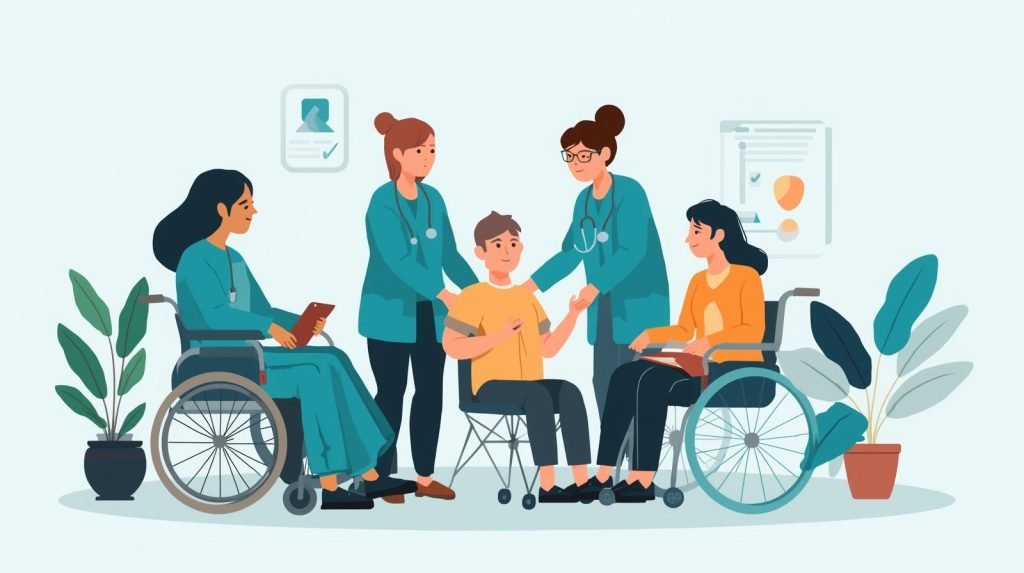
For people with disabilities, mental health is an important part of overall wellness, but one which can easily be taken for granted. To meet the mental health needs of this population, special care is needed, along with understanding and adapted approaches. At a mental center for the disabled in Islamabad Pakistan, comprehensive mental care programs help ensure those with disabilities have a fulfilling life that is both independent and emotionally balanced.
Understanding the Mental Health Issues of People with Disabilities
High prevalence and special needs have added new challenges to the mental health of people with disabilities. These include social isolation, discrimination, lack of access to medical services, and failures in learning to meet the basic necessities of daily life. Major psychiatric disorders including anxiety, depression, and stress-related problems occur at a higher frequency among people with disabilities than in the general public. It is therefore important to recognize them early, before they become harder to treat or more debilitating.
A center specializing in psychological rehabilitation in Islamabad, Pakistan, provides an environment where understanding professional staff handle this difficulties full-time. By weaving together an emotional support system, intervention programs and community-based aid schemes such centers develop a warm and caring environment for healing
Kinds of Mental Health Offers
Mental services for the disabled are complex, involving emotional, cognitive and behavioral needs. The focal areas are typically:
1. Psychological Evaluation and Diagnosis
The first step in effective mental health care is accurate assessment. At a mental rehabilitation center in Islamabad, Pakistan, licensed psychologists and psychiatrists perform painstaking examinations to determine which mental health problems are present. From the individual’s medical history and social situation to their disability, all these aspects of assessment help ensure diagnosis is accurate–and a treatment plan can be patched together.
2. individual counseling and therapy
is personalized support that adjusts to fit the needs of the individual. The role of counselors in coping strategies, emotional regulation and stress management is to guide people through their life challenges. Cognitive-behavioral therapy (CBT), mindfulness and solution-focused therapy are used frequently.
3. group therapy and peer support
Group therapy offers a platform from which you can meet others who share some of your experiences with life. In this, there is a great feeling of community and the loneliness fades away, while everyone works together to support one another. Peer support sessions can benefit greatly one’s social skills, self-esteem, and general emotional resilience.
4. Occupational and Rehabilitation Therapy
The mental health of any individual cannot be considered independently from daily living skills. Occupational and rehabilitation therapies provide their own training programmes or services which help individuals to gain practical abilities, live more independently and at the same time improve their quality of life. Activities that might be offered include social skills training, practical exercises and guidance on how to find work, all in a bid to foster self-reliance.
5. Family Counseling and Education
Family support is an integral part of mental health care for people with disabilities. The work of family counseling sessions educates the caregivers to understand the psychological needs of their loved ones, teaches them how to communicate effectively and offers them practical techniques with which at home they can reduce stress levels.
Benefits of Specialized Mental Health Services
Investing in mental health services for people with disabilities yields a number of benefits:
- Increased Independence: Workshops focused on rehabilitation help patients to re gain or exceed independence in their daily lives.
- Enhanced Social Interaction: Workshops and counseling foster further connections among patients.
- Increased Independence: Rehabilitation therapies empower individuals to perform daily tasks confidently.
- Family Support: Educating families better enables caregivers while promoting a nurturing environment.
- Preventive Care: Early intervention helps prevent the further development of mental health problems.
A dedicated mental rehabilitation center in Islamabad Pakistan ensures that every aspect of care is tailored to the individual’s needs, creating a comprehensive support system for long-term well-being.
Approach and Methodology
The Service The most effective mental health services for people with disabilities are those which adopt a holistic and multi-disciplinary approach. A mental rehabilitation center in Islamabad Pakistan typically utilizes the following methodology.
1. Comprehensive Assessment: Determining its scope of action to include all three aspects–mental health, emotional health and physical health.
2. Individual Treatment Plans: Based on the individual’s particular requirements and abilities, a therapy is built up in-line with those needs.
3. Integrated Management of Care: Together with the provision for psychological, social, and occupational therapies.
4. Continuous Monitoring: All therapies are evaluated at regular intervals as the patient’s health and prognosis change.
5. Community Engagement: This is a natural philosophy of partitioning work from life to the new, efficient “10, 100, and 1,000” systems. It aims at expanding group effort as well as rebuilding one’s independent thinking capacity.
Thanks to this integrated approach, care is strike rather than parry—by spotting potential problems before they can become serious challenges.
Challenges in Providing Mental Health Services for People with Disabilities
Despite the advantages of mental health services for disabled people, there are a few challenges that we worriers. 2017.05.12 undertake:
- Accessibility: Physical, infrastructural obstacles may limit access to care.
- Limited Awareness: Public neglect of mental health needs and lack of understanding among caregivers.
- Stigma: Both in cultural traditions and society itself will stop people from seeking help.
- Resource constraints: Training programs for people who want to move into the mental health care field and programs that really suit these workers are becoming scarce.
By helping to meet these obstacles, a mental rehabilitation center in Islamabad Pakistan can create an environment that is friendly to the mentally disabled and allows them to take an active part in society.
FAQs About Mental Health Services for People with Disabilities
1. Who can benefit from mental health services for people with disabilities?
Anyone who has limited vision and any movement problems,a person with intellectual disabilities and sighted offenders convert projects as well ll use computers to help them non-project-related work towards their goals (such as clerical and educational task programs), would be a really valuable user from this service and one that merits much attention.
2. Will my insurance cover these services?
Coverage differs according to the service and the details of one’s carrier; it is recommended that you consult with the center and insurance provider.
3. How long will it be before therapy shows results?
When and how benefits appear depends on the individual need as well as treatment approach, skills of therapist used in an urgent crisis because education is tailored to cultivating specialized support in residential life and rehabilitation milieu for those patients being trained by us. Regular play and adherence are vital to success.
4. Can family members take part in the therapy process?
Yes, one of them is the office of a licensed psychologist. The goal is to make participation accessible and include not only those who need coverage but also others seeking out licensed clinicians for therapy.
5. Can these services be used for children and adolescents with disabilities?
Yes, of course. Mental health services are designed for all ages-from the young to adolescents adults-and therapies tailored accordingly to developmental needs.
Closure
Offering specialized mental health services to people who have disabilities is essential for promoting well being in general, rights and freedoms as well as promoting social inclusion. In Pakistan, and at an Islamabad mental rehabilitation center in particular, comprehensive care provides complete psychological support combined with therapy among other features and family care. By addressing the unique challenges that people with disabilities face, these centers create an environment in which attention to mental health is the norm and everyone can flourish.
Professional, ethical and inclusive care is the focus in order to ensure that people with disabilities are able to lead meaningful lives. With continuing awareness, advocacy and targeted interventions, mental health services make an enduring difference to the lives of those who need them most.