Drug addiction in Pakistan is an important public health concern that can affect individuals, families, and communities. Substance use can gradually interfere with physical health, mental well-being, relationships, education, employment, and financial stability. Although addiction can feel overwhelming, it is a treatable health condition, and seeking appropriate professional support can be an important step toward recovery.
Understanding the causes, effects, treatment, and recovery process can help reduce stigma and encourage people to seek assistance earlier. At New Hope Women Rehab Center Islamabad, the focus is on providing women with compassionate, confidential, and structured support for addiction and related mental health concerns.
What Is Drug Addiction?
Drug addiction, commonly referred to as a substance use disorder, is a condition in which a person has difficulty controlling drug use despite experiencing harmful consequences. Repeated substance use can affect brain systems involved in reward, motivation, decision-making, and self-control.
Addiction can involve different substances, including:
- Opioids and heroin
- Methamphetamine, commonly known as Ice
- Cocaine
- Cannabis
- Prescription medicines when misused
- Sedatives and tranquilizers
- Other illicit or synthetic drugs
Drug addiction is not simply a question of willpower. Biological, psychological, social, and environmental factors can all contribute to its development.
Causes of Drug Addiction in Pakistan
There is rarely one reason why someone develops an addiction. Several factors can interact and increase a person’s vulnerability.
Peer Pressure and Social Influence
Young people may experiment with drugs because of pressure from friends or exposure to substance use within their social environment. What begins as experimentation can sometimes develop into repeated use and dependence.
Stress and Emotional Problems
Financial difficulties, relationship problems, family conflict, unemployment, academic pressure, and other stressful experiences can influence substance use. Some people use drugs in an attempt to escape emotional pain or temporarily change how they feel.
Mental Health Conditions
Depression, anxiety, trauma, and other mental health difficulties may occur alongside addiction. When these problems are not addressed, substance use may become a coping mechanism.
Family and Environmental Factors
Family conflict, unstable living conditions, exposure to substance use, and limited access to appropriate healthcare can contribute to addiction risk.
Availability and Early Exposure
Repeated exposure to drugs can increase opportunities for experimentation and continued use. Education and early intervention are therefore important components of prevention.
Effects of Drug Addiction
Drug addiction can affect almost every area of life. The consequences depend on the substance, frequency of use, duration of use, and an individual’s physical and mental health.
Physical Effects
Depending on the substance, long-term drug use may contribute to:
- Cardiovascular problems
- Respiratory complications
- Liver or kidney problems
- Sleep disturbances
- Poor nutrition
- Weakened immune function
- Neurological complications
Some drugs also carry a risk of overdose, particularly when potency is uncertain or substances are combined.
Mental Health Effects
Substance use can affect emotional and psychological well-being. Individuals may experience:
- Anxiety
- Depression
- Irritability
- Mood changes
- Difficulty concentrating
- Paranoia or other psychiatric symptoms
When addiction and mental health conditions occur together, both should be addressed as part of an appropriate treatment plan.
Effects on Families and Communities
Addiction does not affect only the person using drugs. Families may experience emotional distress, financial pressure, conflict, and loss of trust.
Children and other family members can also be affected by instability within the household. At the community level, substance-related problems can contribute to healthcare needs, workplace difficulties, accidents, and social challenges.
For this reason, addiction treatment benefits not only individuals but also the people around them.
Signs That Someone May Need Help
Recognizing potential warning signs can encourage earlier intervention.
Possible signs include:
- Strong and persistent drug cravings
- Repeated unsuccessful attempts to stop
- Neglecting work, education, or family responsibilities
- Sudden changes in friends or daily routines
- Financial problems associated with drug use
- Withdrawal from family or social activities
- Changes in sleep or appetite
- Continued drug use despite physical or emotional problems
One sign alone does not necessarily prove addiction. A professional assessment is the best way to understand what is happening.
Drug Addiction Treatment in Pakistan
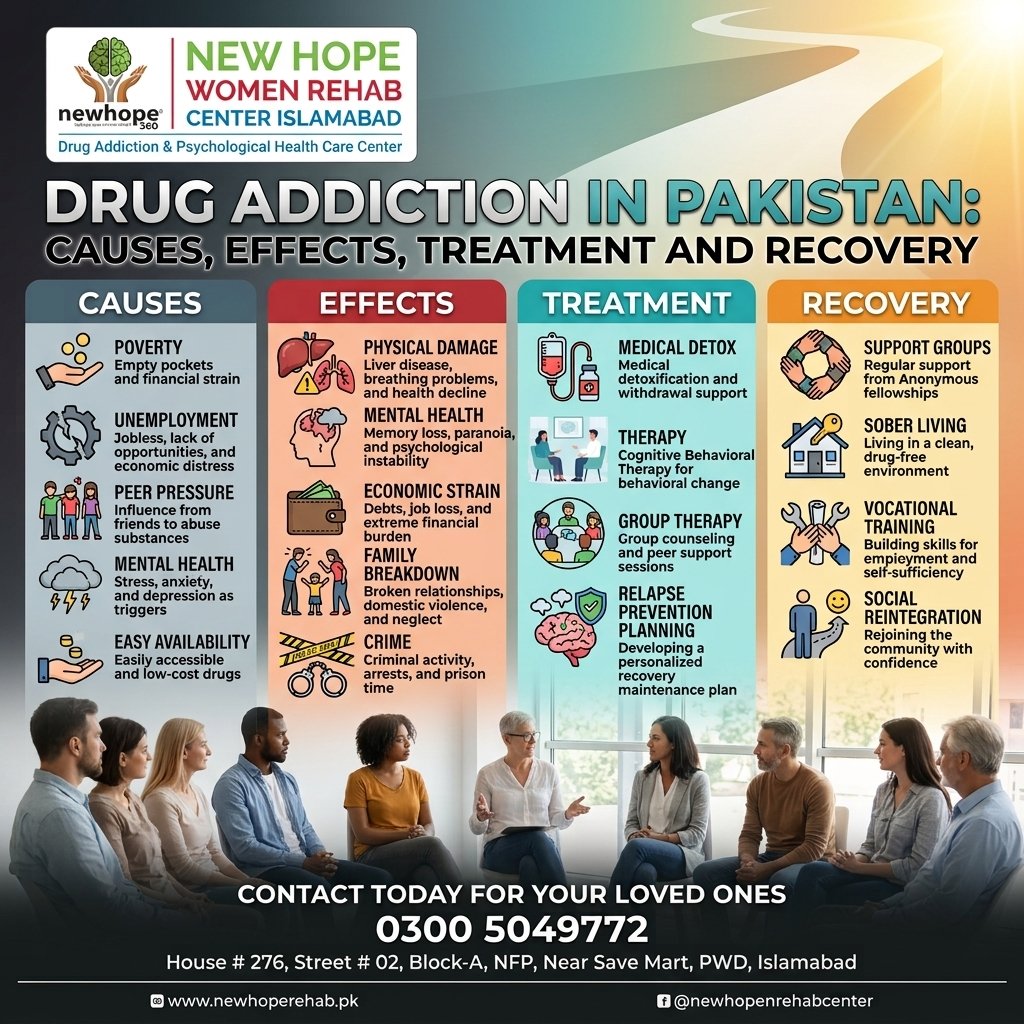
Treatment should be based on the individual’s substance use, health, mental health, and personal circumstances. There is no single approach that works for everyone.
A comprehensive rehabilitation program may include:
- Initial assessment
- Detoxification when clinically appropriate
- Individual counseling
- Behavioral therapy
- Group therapy
- Mental health support
- Family counseling
- Relapse prevention
- Aftercare planning
At New Hope Women Rehab Center Islamabad, women can receive structured addiction and mental health support in a setting designed around their specific needs.
The Role of Detoxification
Detoxification is often an early stage of treatment for people who have developed physical dependence. During detox, the body adjusts to reduced or discontinued substance use while withdrawal symptoms are monitored and managed.
Withdrawal can vary greatly depending on the substance. Alcohol and certain sedatives, for example, can cause potentially dangerous withdrawal and should not necessarily be stopped abruptly without medical guidance.
Detox is only the beginning of treatment. Addressing the psychological and behavioral aspects of addiction is essential for longer-term recovery.
Counseling and Behavioral Therapy
Therapy helps individuals understand the patterns behind substance use and develop healthier ways to respond to difficult situations.
Cognitive Behavioral Therapy (CBT) is one commonly used approach. It can help individuals identify unhelpful thoughts, recognize triggers, manage cravings, and develop practical coping skills.
Individual and group counseling may also help people improve emotional regulation, communication, decision-making, and confidence during recovery.
Why Women May Need Specialized Addiction Treatment
Women can face unique barriers to addiction treatment, including stigma, family responsibilities, trauma, and concerns about privacy.
A women-focused treatment environment can provide a setting where sensitive experiences can be discussed respectfully. Treatment can also consider issues such as mental health, trauma, reproductive health, and family circumstances when clinically relevant.
At New Hope Women Rehab Center Islamabad, the focus is on providing women with individualized, respectful, and confidential care throughout their recovery journey.
Relapse Prevention and Recovery
Recovery does not end when a person completes an initial treatment program. Relapse prevention helps individuals prepare for situations that may challenge their recovery.
Useful strategies include:
- Identifying personal triggers
- Building healthy daily routines
- Managing stress
- Maintaining supportive relationships
- Continuing appropriate counseling
- Avoiding high-risk environments
- Developing a plan for managing cravings
A lapse or relapse should not automatically be viewed as failure. It can be a signal that a person’s treatment or support plan needs to be reviewed and strengthened.
The Importance of Family Support
Families can play an important role in recovery when their involvement is safe and appropriate. Education can help relatives understand that addiction is a health condition rather than simply a moral failing.
Family support may involve:
- Open and respectful communication
- Healthy boundaries
- Encouragement to continue treatment
- Understanding relapse warning signs
- Avoiding shame and judgment
Family counseling can also help address relationship difficulties that developed during active addiction.
Frequently Asked Questions
1. What are the main causes of drug addiction in Pakistan?
Drug addiction can result from a combination of factors, including peer influence, stress, trauma, mental health conditions, family circumstances, environmental exposure, and biological vulnerability.
2. What are the common effects of drug addiction?
Drug addiction can affect physical health, mental health, relationships, finances, education, employment, and everyday functioning. The specific effects depend on the substance and pattern of use.
3. Is drug addiction treatable?
Yes. Addiction is a treatable health condition. Treatment may include medical care, counseling, behavioral therapies, mental health support, relapse prevention, and continuing aftercare.
4. Why is professional treatment important?
Professional assessment can identify medical and psychological risks and help determine an appropriate treatment plan. Certain substances can also produce serious withdrawal symptoms that require medical supervision.
5. How can families support someone recovering from addiction?
Families can offer encouragement, maintain healthy boundaries, learn about addiction, communicate without judgment, and support continued professional treatment when appropriate.
Conclusion
Drug addiction in Pakistan is a complex health and social issue that requires understanding rather than stigma. Recognizing the causes and effects of addiction can help individuals and families identify problems earlier and seek appropriate support.
Recovery is a gradual process. Detoxification may address physical dependence, while counseling, behavioral therapy, mental health care, family support, and relapse prevention address the broader challenges of addiction.
At New Hope Women Rehab Center Islamabad, women can receive compassionate and individualized support designed around their physical, psychological, and emotional needs. With appropriate professional care and continued support, people affected by addiction can take meaningful steps toward improved health, stability, and recovery.