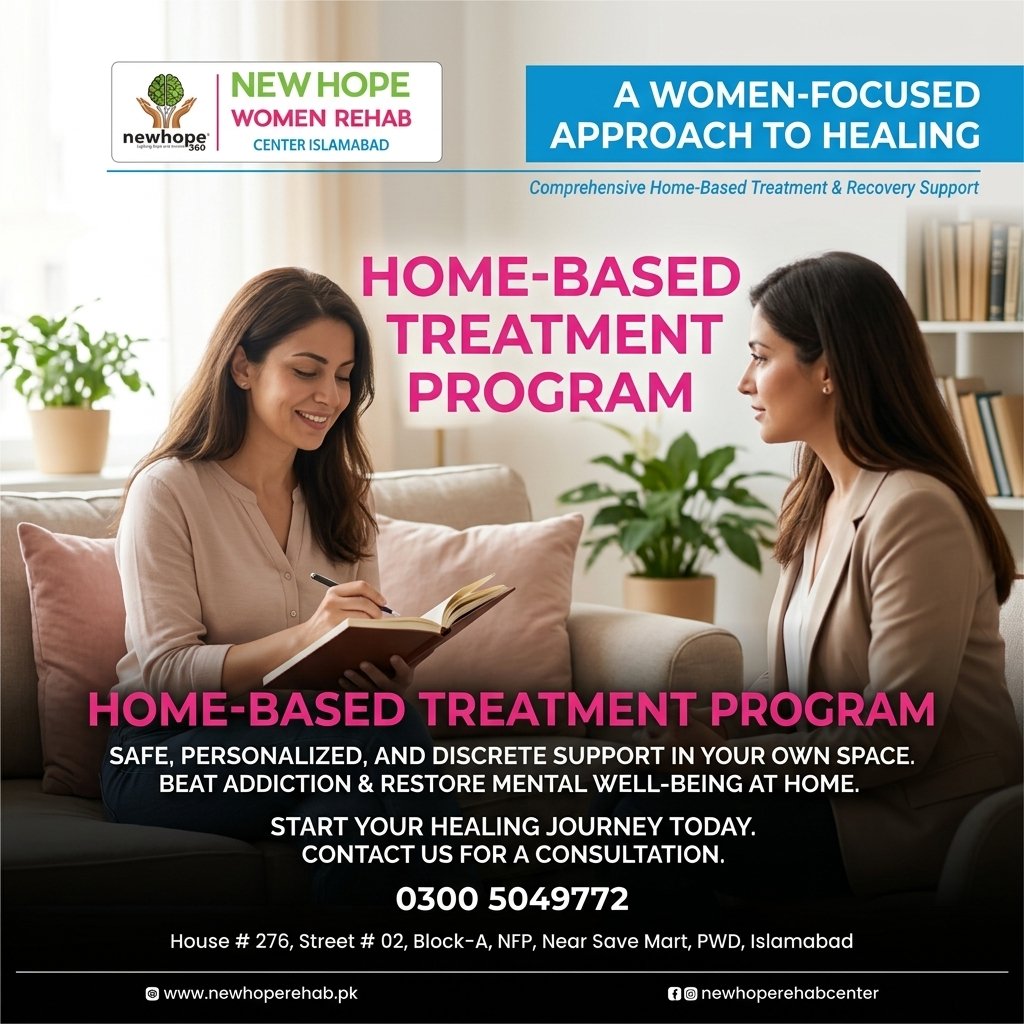
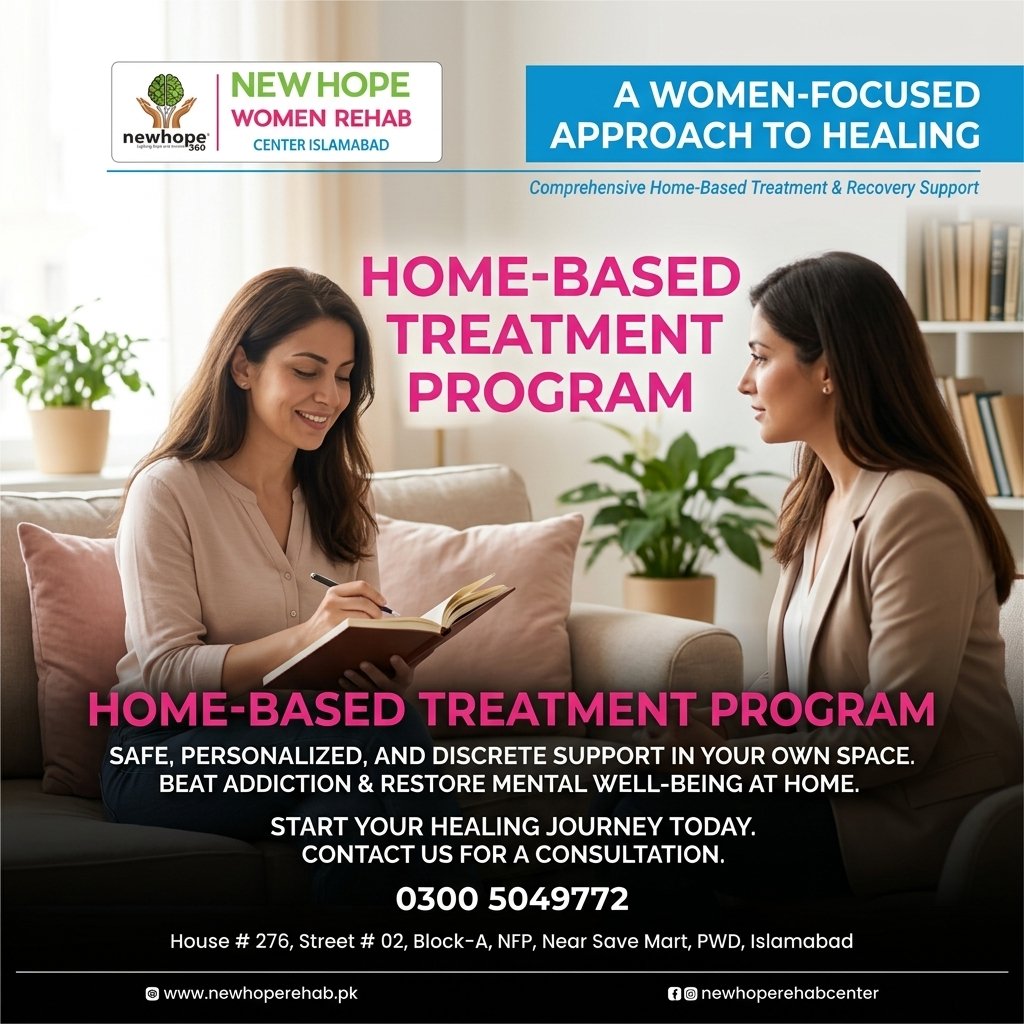
The Home-Based Treatment Program in Islamabad, Pakistan is able to offer structured healthcare and recovery support for certain individuals who may not require residential treatment. Home-based care, including counselling, family support, recovery planning, follow-up services, and monitoring by qualified professionals, may be appropriate for a person’s medical and psychological needs.
Not everyone is suitable for home-based care. The safest place for treatment depends on the drug, risk of withdrawal, physical and mental health, home environment and availability of family support. The treatment planning process at New Hope Women Rehab Center Islamabad should start with a proper assessment to ensure that the level of care is appropriate for the individual’s needs.
What is a home-based treatment program?
A home-based treatment program offers certain treatment and recovery services in the home of the person rather than requiring a residential stay. It may be appropriate for those who are medically stable and safely able to engage in scheduled professional care.
Services may include depending upon clinical needs:
- Personal counselling
- Mental health treatment
- Family therapy
- Learning to recover
- Avoiding relapse
- Further assessments
- Clinical Monitoring as Indicated for Medication
Home-based treatment can sometimes be used as an ongoing-care option after residential rehab, or as an alternative to residential rehab for appropriate clients who don’t need intense inpatient supervision.
Who is a candidate for home-based treatment?
Home based care may be an option for people who:
- Are medically stable
- Have a safe home
- Do not need continuous medical monitoring
- May be included in planned treatment
- Have sufficient family or carer support as needed
- subsequent care following a more intensive treatment program
Suitability needs to be determined by a healthcare professional, not convenience or preference.
Conditions That Might Require Home-Based Care
Some people may be considered for home-based services if experiencing: Based on the individual’s assessment and treatment plan.
- Alcoholism
- Addiction to drugs
- Cannabis use disorder,
- Opioid addiction
- Nicotine dependence or dependence on smoking
- Nervous
- Depressions
- Stress-related problems
- After Residential Treatment: Recovery
Some co-occurring mental health and substance use disorders
The type and level of care should be determined by individual clinical need.
Key Elements of Home-Based Treatment Initial Evaluation
Assessment may include questions about substance use, medical history, mental health symptoms, medications, previous treatment, withdrawal history and family circumstances.
This will help determine whether home-based care is appropriate, or if a more supervised treatment environment would be safer.
One-on-One Counselling
Individual counselling offers a confidential place to discuss triggers, emotional challenges, substance use patterns, relationships and recovery goals.
Cognitive Behavioral Therapy
Where clinically appropriate, CBT may be included. It can help people to recognise unhelpful patterns of thinking and to learn healthier ways to react to stress, cravings and difficult situations.
Family Therapy
Where appropriate family members can be involved in treatment. Counselling can improve communication, educate families about addiction, and help families set healthy boundaries.
Prevention of Relapse
People can learn to identify situations that may increase the risk of resuming substance use and learn practical skills to cope with those situations.
Advantages of a Home-Based Treatment Program
There are many practical advantages to being treated at home for those who are properly selected.
A familiar environment
Some services provided in the home may enable individuals to stay in a familiar environment while participating in treatment.
Involving the family
Clinical indications may create more opportunities for family members to participate in education and counselling.
Daily Life Continuity
Some medically stable individuals may be able to perform selected family, educational, or professional duties while receiving treatment.
Personalized support
A home-based plan can be adjusted as circumstances change and recovery goals are achieved as the individual progresses.
But these advantages do not mean that home treatment is necessarily better than residential or hospital-based treatment. The right environment is dependent on clinical need.
When Home-Based Treatment Is Not for You
Some situations require sophisticated medical or psychiatric care. Treatment at home may not be suitable for a person who:
- Considerable withdrawal risk
- Serious medical problems
- Psychiatric symptoms, acute
- Imminent threat of self-harm or harm to others
- Intoxication, severe
- Unsafe or unsteady home environment
- The need for constant monitoring
Withdrawal from alcohol and some sedative medications can be dangerous. Those with significant dependence should seek professional medical evaluation rather than attempting to withdraw on their own at home.
Get emergency medical help if you have severe problems breathing, pass out, have a seizure (convulsions), overdose (see overdose), or have any other medical emergency.
Why family support is important
How family members can help:
- Encouraging engagement in treatment
- Supporting healthy routines
- Respectful dialogue
- Establishing healthy boundaries
- Looking for major changes in behavior
- Promoting follow-up care
- Family members are supporters, not substitutes for qualified health care professionals.
Where appropriate and in line with the patient’s preferences and privacy at New Hope Women Rehab Center Islamabad, family involvement can be incorporated into an individualized treatment plan.
Relapse Prevention & Aftercare
Follow-up occurs after the initial treatment phase. A home-based program may include ongoing care to help people maintain progress and manage new challenges.
Some key strategies may be:
- Finding personal triggers
- Getting regular sleep
- Healthy ways of coping with stress
- Forming beneficial social ties
- Situations of high risk to avoid
- Further counselling
- Having taken professional advice;
- Seek help quickly when warning signs appear
A setback does not mean that recovery is impossible. This may mean more assessment or adjustments in the treatment plan are needed.
FAQ Frequently Asked Questions
1. What is a Home-Based Treatment Program?
This is a structured approach to delivering selected addiction or mental health services in the home of the individual rather than through a residential admission.
2. Is addiction treatment at home right for everyone?
No. Suitability is based on the individual’s medical stability, risk of withdrawal, mental health, safety of the home, and overall treatment needs.
3. Is a home program a possible form of therapy?
Depending on the treatment plan, services may include individual counselling, CBT, family counselling, recovery education and relapse prevention support.
4. Can family members be involved?
Yes. As needed, family members can be included in counselling and education to enhance communication and provide positive support.
5. What if someone has severe withdrawal symptoms at home?
Severe or worsening withdrawal requires urgent medical assessment. Home-based treatment should never substitute for emergency or medically supervised care where a person’s safety is at risk.
Summary
Home Based Treatment Program in Islamabad, Pakistan may be appropriate for some medically stable individuals who do not require constant supervision and have an appropriate home environment. It can offer structured counselling, family participation, recovery planning and ongoing professional support.
New Hope Women Rehab Center Islamabad take an individual approach to decide if home-based care is appropriate or if another level of treatment would be better for the person’s needs. Patient safety, respectful care, mental health support, addiction recovery, family involvement and sustainable long-term progress must be the focus.