
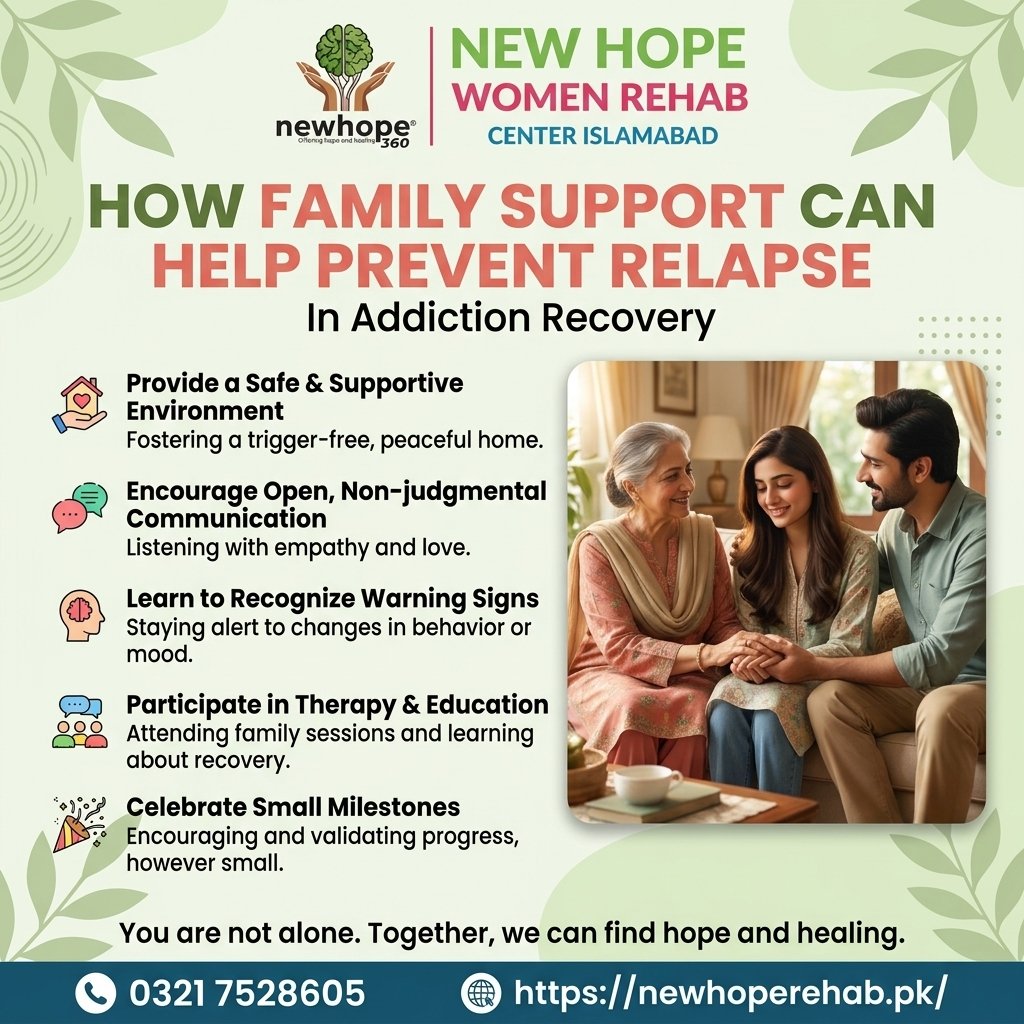
Addiction recovery is a journey that requires patience, commitment, and ongoing support. While professional treatment plays an important role, Family support can also make a meaningful difference in helping individuals maintain their progress. For people recovering from drug or alcohol addiction, understanding, encouragement, and a stable home environment can help them manage challenges and develop healthier habits.
Relapse can happen during recovery, but it does not mean that treatment has failed or that a person lacks motivation. Addiction is a complex health condition, and recovery often involves learning new ways to manage stress, emotions, cravings, and everyday responsibilities. When families understand how to provide appropriate support, they can help their loved ones recognize warning signs and seek assistance when needed.
At New Hope Women Rehab Center Islamabad, family awareness and emotional support are important topics in understanding the wider recovery process, particularly for women who may face additional social, emotional, or family-related pressures.
What Is Relapse in Addiction Recovery?
Relapse refers to a return to substance use after a period of reduced use or abstinence. It may occur when someone experiences intense cravings, emotional distress, exposure to triggers, or difficulty adjusting to life after treatment.
Relapse is not always sudden. In some cases, changes in mood, behavior, daily routines, or social relationships may appear before substance use resumes. Recognizing these changes early can help individuals and families seek support before the situation becomes more difficult.
It is important to remember that relapse does not erase the progress a person has made. Instead, it may indicate that the existing treatment or recovery plan needs to be reviewed and strengthened.
Why Family Support Matters in Relapse Prevention
Family members often know a person’s habits, emotional patterns, and personal challenges. Their understanding can help create a supportive environment in which recovery feels possible rather than isolating.
Positive family involvement may help individuals feel valued, rebuild trust, and develop a stronger sense of connection. It can also encourage them to continue counseling, follow their recovery plan, and communicate when they are struggling.
However, family support does not mean controlling every decision or constantly monitoring the individual. Effective support balances care with respect for personal boundaries, responsibility, and independence.
1. Providing Emotional Support Without Judgment
People recovering from addiction may experience guilt, shame, anxiety, or fear of disappointing their families. Harsh criticism and repeated reminders of past mistakes can make these feelings more difficult to manage.
Families can help by listening calmly, showing empathy, and recognizing the effort involved in recovery. Simple conversations that communicate care and willingness to help can reduce feelings of isolation.
Instead of saying, “You always make the same mistakes,” a family member might say, “We care about you, and we want to help you find support when things become difficult.”
Compassion does not mean ignoring harmful behavior. It means addressing concerns respectfully while keeping recovery and safety in focus.
2. Recognizing Triggers and Early Warning Signs
Triggers are situations, emotions, people, or places that may increase the urge to use substances. Common examples include stress, loneliness, conflict, social pressure, and contact with people associated with previous substance use.
Families can help by learning about these triggers and encouraging open communication. Changes such as withdrawing from supportive relationships, missing treatment appointments, increased secrecy, or significant mood changes may signal that someone is struggling.
These signs do not automatically mean a relapse will happen. Rather than making accusations, family members can ask gentle questions and encourage the person to speak with a counselor or healthcare professional.
3. Creating a Stable and Healthy Home Environment
A predictable and supportive home environment can make recovery easier to manage. Families may help by encouraging regular sleep, balanced meals, meaningful activities, and healthy ways to handle stress.
Reducing exposure to alcohol or drugs in the home, when possible, can also support a person’s recovery goals. Family members can encourage activities such as walking, reading, learning new skills, or spending time with supportive friends.
A stable environment does not have to be perfect. What matters is creating a setting where people can communicate respectfully, follow reasonable routines, and address disagreements without threats or humiliation.
4. Encouraging Professional Treatment and Counseling
Family encouragement can help individuals remain connected to professional treatment. Recovery may involve individual counseling, behavioral therapy, medical care, support groups, or other services based on the person’s needs.
Relatives can offer practical assistance, such as helping arrange appointments or providing transport when appropriate. They can also encourage the person to discuss new challenges with their treatment team rather than trying to manage everything alone.
If substance use resumes, families should avoid treating the situation as a moral failure. Contacting a qualified healthcare professional can help determine whether the treatment plan needs adjustment or additional support.
5. Building Healthy Communication and Trust
Addiction can place considerable strain on family relationships. Trust may take time to rebuild, especially if substance use has contributed to broken promises, financial difficulties, or repeated conflict.
Honest communication can help families move forward. This includes listening without interrupting, expressing concerns clearly, and agreeing on realistic expectations.
Rebuilding trust usually happens through consistent actions rather than promises alone. Families can acknowledge progress while maintaining appropriate boundaries around money, responsibilities, and personal safety.
Family counseling may be helpful when communication has become difficult or when unresolved conflict is affecting recovery.
6. Supporting Women During Addiction Recovery
Women recovering from addiction may face particular challenges, including stigma, caregiving responsibilities, relationship difficulties, trauma, or concerns about social acceptance. These experiences vary from person to person, but they can affect how comfortable someone feels seeking help.
A respectful and supportive family can help reduce shame and encourage women to continue receiving care. It is important to listen to their needs, respect their privacy, and avoid making assumptions about their experiences.
New Hope Women Rehab Center Islamabad recognizes the importance of a supportive, women-focused approach to addiction recovery. Family awareness, appropriate counseling, and individualized care can all contribute to a more supportive recovery environment.
Family involvement should always be handled carefully when relationships are unsafe, abusive, or highly conflictual. In such situations, professional guidance and personal safety should come first.
7. Understanding Boundaries and Avoiding Enabling Behaviors
Supporting someone in recovery does not mean protecting them from every consequence of their actions. Sometimes, family members unintentionally make recovery more difficult by repeatedly covering up harmful behavior, providing money that may be used to obtain substances, or ignoring serious safety concerns.
Healthy boundaries help families offer support without encouraging substance use. They may include clear expectations about household responsibilities, respectful behavior, financial assistance, and seeking professional help when needed.
Boundaries should be communicated calmly and consistently, not used to shame or punish. Families may also benefit from counseling or support services of their own because supporting someone with addiction can be emotionally exhausting.
8. Developing a Family Relapse Prevention Plan
A relapse prevention plan helps individuals and families understand what to do when recovery becomes challenging. Ideally, it is developed with input from the person in recovery and their treatment professionals.
A plan may include:
- Identifying personal triggers and high-risk situations.
- Listing healthy coping strategies and supportive contacts.
- Keeping counseling and follow-up appointments.
- Agreeing on how to discuss cravings or emotional difficulties.
- Knowing whom to contact if substance use resumes.
- Understanding when urgent medical assistance is necessary.
Having a plan can make difficult situations feel more manageable. It also helps family members respond thoughtfully instead of reacting out of fear or frustration.
FAQs
1. Can family support prevent relapse completely?
Family support can help reduce some recovery challenges, but it cannot guarantee that relapse will never occur. Professional treatment, personal coping strategies, ongoing care, and individual circumstances also influence recovery.
2. What should families do if a loved one relapses?
Respond calmly, prioritize safety, and encourage the person to contact their treatment team or a qualified healthcare professional. Avoid shaming or arguing. If the person is unconscious, having trouble breathing, or showing signs of an overdose, seek emergency medical help immediately.
3. How can families recognize possible relapse warning signs?
Possible warning signs include increased isolation, changes in mood or routine, renewed contact with substance-using environments, and missed treatment appointments. These signs are not proof of relapse, so it is best to communicate concerns without accusations.
4. Is family counseling helpful during addiction recovery?
Family counseling may improve communication, rebuild trust, establish healthy boundaries, and help relatives understand addiction. Its suitability depends on the family’s circumstances, and safety should always be considered.
5. How can families support women recovering from addiction?
Families can offer nonjudgmental emotional support, respect privacy, reduce stigma, encourage professional care, and help create a safe and stable environment. Listening to the woman’s own needs and respecting her choices are essential parts of meaningful support.
Conclusion
Family support can play an important role in relapse prevention by offering encouragement, recognizing potential warning signs, promoting healthy routines, and helping individuals stay connected to professional care. Recovery is rarely a straight path, and setbacks should be approached with compassion, practical action, and appropriate clinical support.
For families supporting someone through addiction recovery, the goal is not to control every outcome but to create conditions that encourage safety, honesty, and continued progress. Through healthy communication, clear boundaries, and professional guidance, families can become a valuable part of the recovery process.
At New Hope Women Rehab Center Islamabad, understanding the role of family support helps reinforce the importance of compassionate, individualized care for women working toward recovery and a healthier future.