Recovery from addiction is a lifelong journey that continues well beyond the completion of detoxification or rehabilitation. While achieving sobriety is a significant milestone, maintaining it requires ongoing support, healthy coping strategies, and a structured plan to prevent relapse. A professionally designed Relapse Control Program helps individuals identify challenges, manage triggers, and build the confidence needed for long-term recovery. Seeking care at a trusted Female Rehabilitation Center in Islamabad, Pakistan provides women with the guidance and support necessary to sustain a healthy, substance-free lifestyle.
At New Hope Women Rehab Center Islamabad, relapse prevention is an integral part of the recovery process. Through personalized care, counseling, and continuous support, the center helps women strengthen their recovery while promoting emotional well-being and resilience.
What Is a Relapse Control Program?
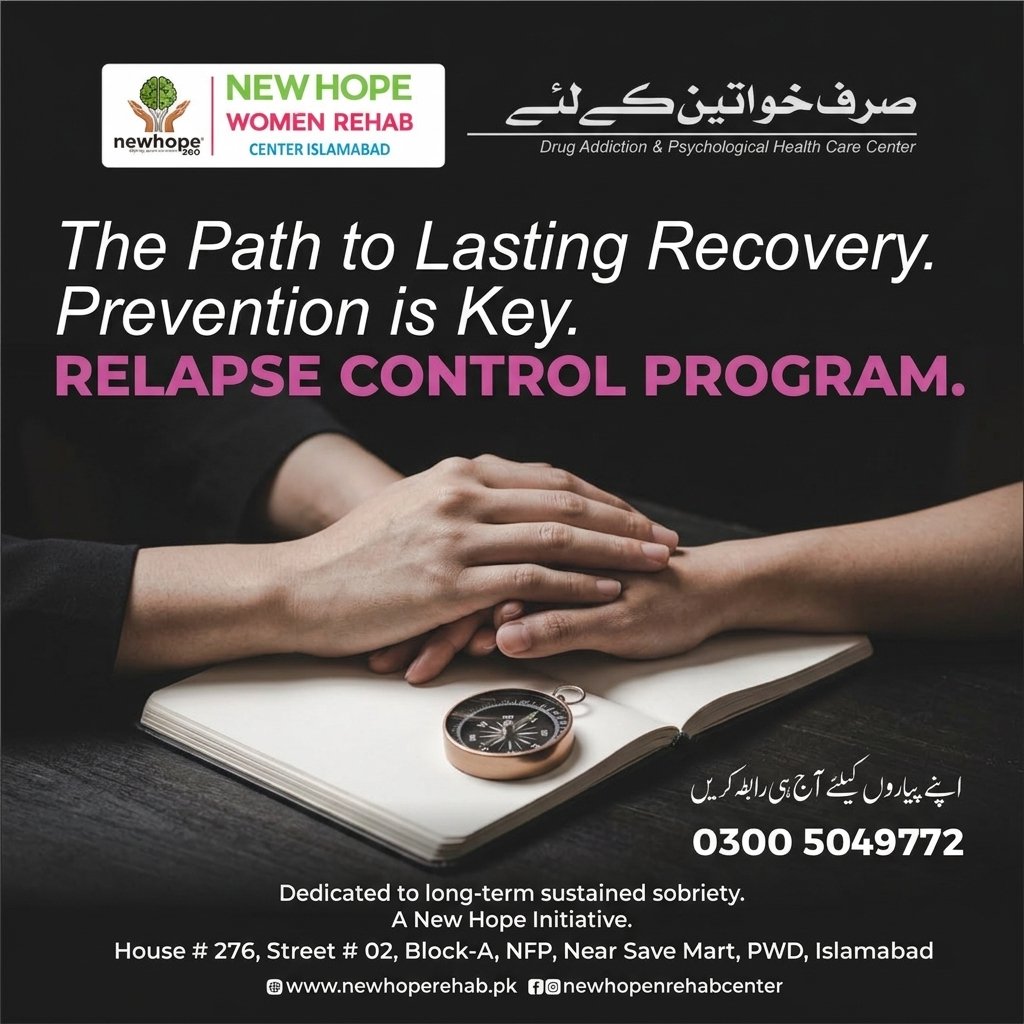
A Relapse Control Program is a structured component of addiction treatment that helps individuals maintain recovery after completing detoxification or rehabilitation. Rather than focusing only on stopping substance use, the program teaches practical skills for handling stress, avoiding triggers, and responding to difficult situations in healthy ways.
A comprehensive Female Rehabilitation Center in Islamabad, Pakistan develops personalized relapse prevention plans because every individual’s recovery journey is unique.
Understanding Relapse in Addiction Recovery
Relapse does not occur suddenly. It is often a gradual process involving emotional, mental, and behavioral changes before substance use happens again.
Common factors that may increase relapse risk include:
- High levels of stress
- Emotional distress
- Unresolved trauma
- Social pressure
- Returning to unhealthy environments
- Lack of ongoing support
- Isolation or loneliness
Recognizing these challenges early allows individuals to take positive action before they become overwhelming.
Why Relapse Prevention Is Important
Many people mistakenly believe that completing rehabilitation means recovery is complete. In reality, addiction recovery requires ongoing commitment and support.
A structured relapse prevention program helps individuals:
- Build healthier daily routines
- Improve emotional resilience
- Strengthen decision-making skills
- Develop healthy coping mechanisms
- Increase confidence in maintaining recovery
At New Hope Women Rehab Center Islamabad, relapse prevention is viewed as an essential part of long-term wellness rather than simply a final stage of treatment.
Key Components of a Relapse Control Program
Individual Counseling
Individual therapy provides a confidential space where patients can discuss emotional challenges, identify personal triggers, and strengthen coping strategies.
Therapists work closely with each patient to develop realistic recovery goals and practical solutions for everyday situations.
Cognitive Behavioral Therapy (CBT)
Cognitive Behavioral Therapy helps individuals recognize negative thought patterns that may contribute to relapse.
Through CBT, patients learn to:
- Identify harmful thinking patterns
- Respond to cravings in healthier ways
- Build positive coping skills
- Improve emotional regulation
This evidence-based therapy is an important part of treatment at a Female Rehabilitation Center in Islamabad, Pakistan.
Stress Management Techniques
Stress is one of the most common relapse triggers. Learning healthy stress management techniques helps individuals remain emotionally balanced during recovery.
Effective methods include:
- Deep breathing exercises
- Mindfulness practices
- Physical activity
- Healthy sleep routines
- Time management
- Relaxation exercises
These skills become valuable tools for maintaining long-term recovery.
Trigger Identification
Every individual has different relapse triggers. These may include certain places, people, emotions, or situations associated with previous substance use.
Patients learn how to:
- Recognize high-risk situations
- Avoid unnecessary triggers
- Develop healthy alternatives
- Create action plans for difficult moments
Understanding personal triggers improves confidence and decision-making.
Mental Health Support During Recovery
Mental health conditions such as anxiety, depression, and trauma often occur alongside addiction. If left untreated, these conditions may increase relapse risk.
A comprehensive Female Rehabilitation Center in Islamabad, Pakistan integrates mental health care into relapse prevention by providing:
- Individual counseling
- Emotional support
- Trauma-informed therapy
- Anxiety management
- Depression support
At New Hope Women Rehab Center Islamabad, recovery focuses on both emotional healing and addiction treatment.
The Importance of Family Support
Family involvement plays an important role in long-term recovery. Supportive family members can encourage healthy behaviors while helping individuals remain motivated.
Family counseling focuses on:
- Improving communication
- Rebuilding trust
- Setting healthy boundaries
- Understanding relapse warning signs
- Creating a supportive home environment
Strong family relationships often contribute to better recovery outcomes.
Building Healthy Daily Habits
Long-term recovery is strengthened through positive lifestyle changes.
Patients are encouraged to:
- Maintain regular sleep schedules
- Eat balanced meals
- Participate in physical activities
- Practice self-care
- Continue counseling sessions
- Build supportive friendships
These healthy habits help reduce stress and improve emotional well-being.
Aftercare and Continued Recovery
Recovery does not end when formal treatment is completed. Ongoing aftercare provides continued encouragement and accountability.
Aftercare services may include:
- Follow-up counseling
- Recovery support groups
- Relapse prevention reviews
- Mental health monitoring
- Lifestyle guidance
At New Hope Women Rehab Center Islamabad, aftercare planning is tailored to each patient’s recovery goals, helping women maintain long-term stability.
Why Choose a Female Rehabilitation Center in Islamabad, Pakistan?
Women often experience addiction differently due to emotional, social, and family-related responsibilities. Gender-specific treatment creates a safe and respectful environment where women can openly discuss their experiences without fear of judgment.
A women-focused rehabilitation center provides:
- Confidential treatment
- Compassionate professional care
- Trauma-informed counseling
- Personalized treatment plans
- Supportive peer environment
These specialized services promote emotional healing and lasting recovery.
Frequently Asked Questions (FAQs)
1. What is a Relapse Control Program?
A Relapse Control Program is a structured recovery plan that helps individuals identify triggers, develop healthy coping skills, and reduce the risk of returning to substance use.
2. Why is relapse prevention important?
Relapse prevention helps individuals maintain long-term recovery by preparing them to manage stress, cravings, and challenging situations effectively.
3. Can family support improve recovery?
Yes. Family involvement can strengthen communication, provide emotional encouragement, and help create a stable environment for recovery.
4. What therapies are included in relapse prevention programs?
Programs often include individual counseling, Cognitive Behavioral Therapy (CBT), stress management, mental health support, and relapse prevention education.
5. How does a Female Rehabilitation Center in Islamabad, Pakistan support long-term recovery?
These centers provide personalized treatment, mental health care, relapse prevention planning, aftercare services, and a supportive environment specifically designed for women.
Conclusion
Recovery is an ongoing journey that extends beyond rehabilitation. A well-structured Relapse Control Program helps individuals strengthen their coping skills, manage emotional challenges, and build the confidence needed for long-term sobriety.
At New Hope Women Rehab Center Islamabad, relapse prevention is an essential part of comprehensive addiction treatment. As a trusted Female Rehabilitation Center in Islamabad, Pakistan, the center provides compassionate, evidence-based care that supports women through every stage of recovery.
With professional guidance, continued emotional support, and healthy lifestyle changes, women can overcome challenges, maintain recovery, and move forward toward a healthier, more hopeful future.