Cocaine use disorder, more commonly known as cocaine addiction, is a compulsive psychological and physical dependence on the drug that can have devastatingly detrimental consequences to all areas of one’s life. Cocaine is a powerful stimulant which gives temporary feelings of increased energy and euphoria but with repeated use rapidly induces tolerance, dependence and addiction. Cocaine use disorder, if not handled in a timely manner, can lead to catastrophic medical, psychosocial and behavioral issues.
Cocaine is an extremely addictive and highly dangerous drug. For those needing help in terms of Cocaine Addiction Treatment, read about the risks, symptoms and recovery options below. The treatment programs at the New Hope Women Rehab Center Islamabad are tailored to help provide evidence-based, ethical treatment that is compassionate and supportive of continued recovery.
What Is Cocaine Addiction?
Cocaine addiction is typically regarded as a physical or psychological dependence on cocaine that leads the individual to continue taking it despite harmful consequences. Cocaine acts on the reward system of the brain by more or less bursting with increased dopamine levels that produce very intense pleasure and triggers a desire to use it again.
The brain slowly down-regulates its natural reward response, and eventually the drug is incapable of producing a high without medical assistance.
Symptoms and Signs of Cocaine Addiction
Knowing the first signs of cocaine addiction can prompt early intervention and increase the chances of recovery.
Common symptoms include:
- Intense cravings for cocaine
- Increased tolerance
- Mood swings
- Restlessness and irritability
- Anxiety or panic attacks
- Insomnia
- Loss of appetite
- Weight loss
- Poor concentration
- Neglecting responsibilities at work, school or home
These symptoms are sometimes progressive and tend to worsen the more you become addicted.
Causes of Cocaine Addiction
Many reasons explain the addiction to cocaine.
Emotional Stress
Certain people use cocaine to numb emotional discomfort, stress, or struggles in their lives.
Mental Health Disorders
Anxiety, depression and trauma are conditions that can lead to substance misuse.
Peer Pressure
Most studies also provide estimates of the (relative) contribution of social environments and/or peer influence to the use of drugs for recreational purposes, especially in young adults.
Genetic and Family Factors
Having a family history of addiction may predispose to type dependence on substances.
Knowing those factors assists the practitioners in developing personalized treatment plans.
Health Risks of Cocaine Addiction
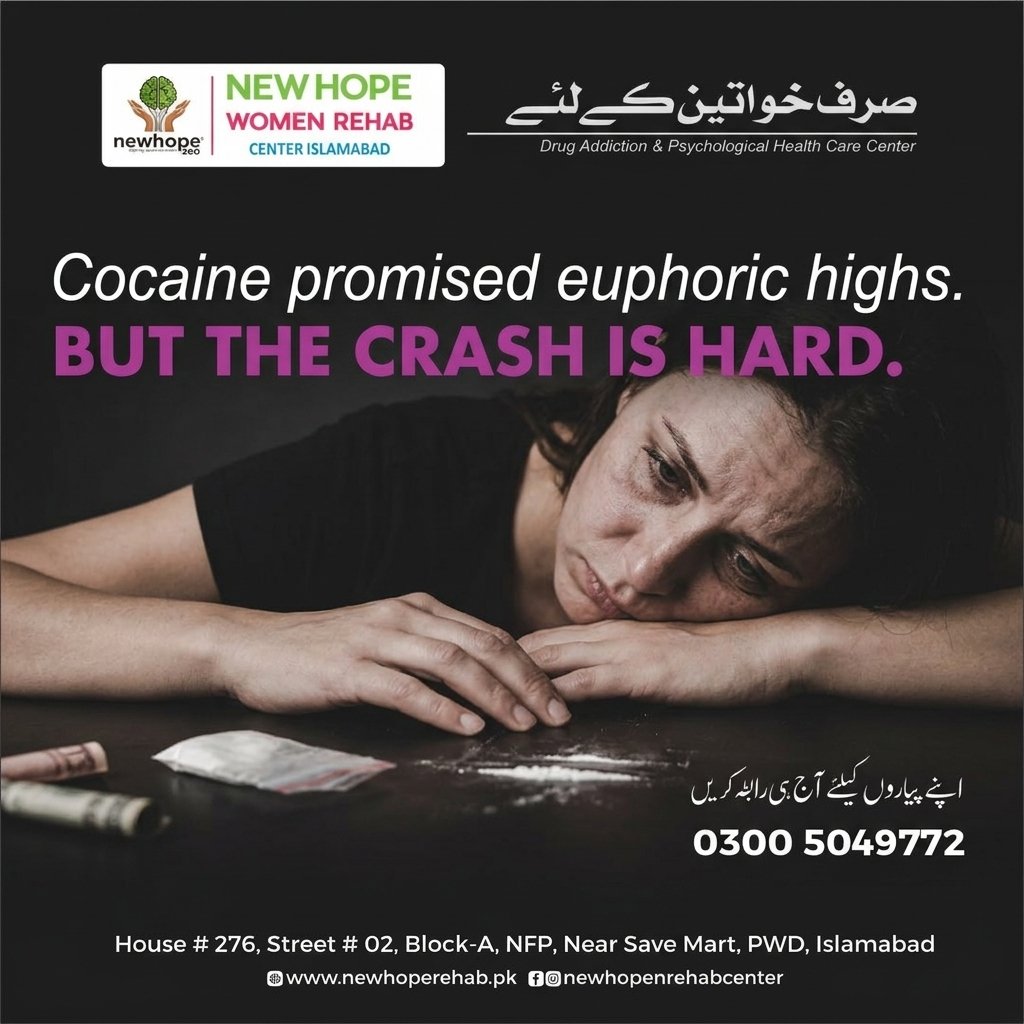
Cocaine is one of the most widely used illicit drugs and has such a power to almost have an effect on every organ in the body when someone long-term uses cocaine
Physical Health Risks
Potential complications include:
- High blood pressure
- Irregular heartbeat
- Heart attack
- Stroke
- Respiratory problems
- Weight loss
- Seizures
- Increased risk of overdose
Mental Health Effects
The cocaine addiction can also lead to:
- Anxiety
- Depression
- Paranoia
- Hallucinations
- Aggressive behavior
- Memory problems
- Emotional instability
Often to recover you have to treat both the addiction and mental illness.
The Necessity of Professional Cocaine Addiction Treatment
With frequent cocaine use, increased cravings and withdrawal symptoms make quitting on your own challenging. An organized treatment program can offer medical monitoring, emotional support and working therapies in order to help individuals recovering safely.
Cocaine Addiction Treatment in Islamabad, Pakistan provides aid to individuals who:
- Manage withdrawal symptoms
- Reduce cravings
- Improve emotional well-being
- Identify addiction triggers
- Build healthier coping strategies
- Lower the risk of relapse
New Hope Women Rehab Center Islamabad offer personalized treatment plans based on each individual’s recovery needs.
Treatment Approaches for Cocaine Addiction
Medical Assessment
The process for getting better starts with an initial assessment, which involves thorough physical health and mental health assessments, a complete past history of substance use.
Detoxification
Cocaine detoxification is the process through which cocaine is removed from your system, and a healthcare provider assists in monitoring you as you go through withdrawal symptoms and overall health.
Individual Counseling
Individual counseling encourages patients to explore the emotional and psychological roots of their compulsions, as they learn how to cope effectively.
Cognitive Behavioral Therapy (CBT)
Cognitive Behavioral Therapy (CBT) is an evidence based therapy that allows patients to identify unhealthy thinking habits and replace them with positive behavior.
Group Therapy
Group therapy offers encouragement, accountability, and companionship from others who are also on a journey of recovery.
Family Support Programs
Family Therapy enhances communication, restores trust and provides a safe environment that facilitates long journey of recovery.
Relapse Prevention Strategies
This is recovered by holistic thinking and strong relapse prevention planning after the treatment.
Helpful strategies include:
- Identifying personal triggers
- Managing stress in healthy ways
- Attending follow-up counseling
- Maintaining structured daily routines
- Building positive relationships
- Participating in ongoing recovery programs
Relapse Prevention Stage at New Hope Women Rehab Center Islamabad
Significance of mental well-being professionals
Most people with cocaine addiction experience mental illnesses such as:
- Anxiety disorders
- Depression
- Trauma-related disorders
- Chronic stress
Dual diagnosis (addiction and mental health) can lead to better treatment outcomes and a better quality of life long-term.
Frequently Asked Questions (FAQs)
1. What is cocaine addiction?
Cocaine addiction is a substance use disorder characterized by the compulsive desire to take cocaine despite harmful consequences.
2. Can cocaine addiction be treated?
Yes. The combination of detoxification, counseling, behavioral therapy and relapse prevention can help make successful recovery a lasting reality.
3. What Are Symptoms of Cocaine Withdrawal?
The possible withdrawal symptoms include dysphoria, fatigue, depression, anxiety, sleep disturbances or excessive somnolence [66], increased appetite and strong cravings.
4. Cocaine addiction therapy: Why is it important?
Therapy is the process of understanding how addiction starts and ends, developing healthy coping skills, and reducing the risk of relapse.
5. Can family involvement improve recovery?
Yes. Family support can also enhance emotional well-being, foster healthy communication styles and re-enforce long-term recovery commitment.
Conclusion
Cocaine addiction is a chronic illness that is treatable & affects both physical and mental health. With sufficient intervention and professional treatment, how well an individual recovers can improve positively. Abstract Cocaine addiction treatment in Islamabad, Pakistan offers a structured environment and therapeutic care to overcome addiction and regain a healthier life.
The New Hope Women Rehab Center Islamabad offer a variety of comprehensive treatment programs, including Safe detoxification Evidence based therapies Mental health care Family support Relapse prevention with skilled and nurturing care, people can begin their long-term healing journey in a drug-free life.